Learning Beyond Exams: Exploring Qualification Pathways for Home-Educated Teens
One of the questions we hear most often from home-educating parents is, “What home education qualification pathways are available for UK teens?”
It’s a question that can feel particularly weighty as our children move into their secondary years. While home education gives us enormous freedom, it can also leave us wondering whether we’re making the right choices when it comes to exams, qualifications, and future opportunities.
The good news is that there isn’t just one pathway to success.
In a recent discussion on qualification routes for home-educated teenagers, educator Shannan shared an encouraging reminder:
“There’s many different routes to take to that end goal.”
For many of us, that’s exactly what we need to hear.
The traditional school route of GCSEs, A Levels, and university is only one option among many. Today’s home-educated teens have access to a wide range of pathways, from apprenticeships and college courses to Open University study, entrepreneurship, and even American high school qualifications.
The challenge isn’t finding a pathway. It’s finding the pathway that best fits your child’s God-given gifts, interests, and future aspirations.
Rethinking Success Beyond University
For decades, university was often seen as the natural next step for academically capable students. But the landscape has changed significantly.
As Emma explained,
“Even for very bright students, it’s no longer the automatic route of qualifications and then jumping into university.”
Many young people are questioning whether a degree is worth the financial investment. Others are discovering careers that value practical skills and experience just as much as academic credentials.
As Christian parents, this shift gives us an opportunity to think more intentionally about what success looks like for our children. Rather than assuming there is one correct route, we can prayerfully consider how God has uniquely wired each child.
Some teenagers thrive in academic environments. Others are builders, creators, entrepreneurs, artists, or problem-solvers. Home education gives us the flexibility to nurture those strengths rather than forcing every child into the same mould.
Apprenticeships: Learning While Earning
One pathway that has become increasingly attractive is the apprenticeship route.
Modern apprenticeships now cover a surprisingly wide range of professions, including areas that were once almost exclusively degree-based careers. The appeal is obvious: young people can gain recognised qualifications while earning an income and developing real-world experience.
However, there is an important point that many home-educating families overlook.
As Emma cautioned:
“Most apprenticeships need some kind of entry qualifications.”
Even practical trades often require basic qualifications in English, maths, and sometimes science. This doesn’t mean a teenager needs a full suite of GCSEs, but it does mean parents should investigate requirements early rather than waiting until age sixteen.
Building relationships with local colleges, attending open days, and asking questions well in advance can make a significant difference. Families coming from a non-traditional educational background often benefit from personal conversations rather than relying solely on online application systems.
Why Many Home Educators Prefer IGCSEs
For families who do want formal qualifications, IGCSEs remain one of the most popular choices.
Unlike many GCSEs, which include coursework elements, IGCSEs are generally assessed through examinations alone. This makes them much more straightforward for home-educating families.
One of the most valuable pieces of advice shared in the discussion was to start by researching exam centres before choosing a curriculum.
Many parents instinctively begin by selecting a course or textbook. However, Shannan recommended working backwards:
“The first step is actually this kind of back engineering.”
In practical terms, this means finding out which exam centres are accessible to your family, discovering which exam boards they support, comparing costs, and then selecting curriculum resources that align with those requirements.
It may not be the most exciting part of the process, but it can save a great deal of stress later on.
The Open University Option
One route that continues to grow in popularity among home-educating families is Open University.
For many parents, Open University offers something refreshingly different. Students can progress from little or no formal qualification background all the way to degree level through a flexible and accessible system.
Shannan spoke particularly positively about this route:
“It is a really viable option.”
She also highlighted the flexibility available through Open University’s personalised degree pathways, allowing students to combine subjects and create a more bespoke educational experience than many traditional universities offer.
For home-educated young people who thrive in independent learning environments, this can be an excellent fit.
The Hidden Value of Electives
Electives and enrichment subjects are important features of home education qualification pathways for UK teens. These experiences create balance and a well-round individual ready to explore even more after secondary education is completed.
When parents start thinking about qualifications, it’s easy to focus entirely on exam subjects. Yet some of the most meaningful learning often happens outside those core academic areas.
Art awards, speech and drama qualifications, music grades, science awards, heritage awards, photography, debate, apologetics, and foreign languages can all contribute to a teenager’s educational journey.
These experiences do more than fill a timetable.
As Shannan explained:
“It shows that you’re a well-rounded person and you’ve got all these other interests.”
For university applications, apprenticeships, and future employment, demonstrating passion, commitment, and initiative can be just as valuable as exam results.
Many enrichment awards also carry UCAS points, making them recognised achievements in their own right.
Faith-Based Learning Matters
In Christian home education, learning outcomes are about much more than qualifications or pathways to higher education and careers in the UK. We want our children to develop wisdom as well as knowledge. Character as well as competence. This is where electives such as apologetics, logic, and debate become particularly powerful. The discussion highlighted how these subjects help students learn to evaluate arguments, recognise flawed reasoning, communicate clearly, and defend their faith with confidence.
One observation particularly stood out:
“It’s really helped them be able to think through arguments well.”
In a culture where young people are constantly exposed to competing worldviews, these skills are invaluable. Not only do they strengthen a teenager’s faith, but they also enhance essay writing, critical thinking, and communication skills that benefit them across every area of life.
Exploring the US High School Diploma Pathway
An increasing number of UK home educators are also exploring the American high school diploma route. For many families, this option feels refreshing because it recognises the full breadth of a student’s education rather than relying solely on a series of final examinations.
Instead of accumulating iGCSE grades, students build a transcript that records their academic progress across subjects throughout their high school years. This includes core subjects such as English, maths, science, and social studies, alongside electives and enrichment activities.
One of the most appealing aspects of this approach is that it values the whole educational journey. Elective subjects, leadership experiences, volunteer work, and specialised interests can all contribute to a student’s overall profile. For families who embrace interest-led learning, this can feel much more aligned with the ethos of home education.As Shannan explained, the transcript serves as:
” The Us Highschool diploma, transcript and SAT score provide a valid proof of education.”
For many UK families, understanding this pathway opens up opportunities they may never have realised existed.
There Is No Single Right Route for Home Education Qualification Pathways in the UK
Perhaps the most important takeaway from the discussion is that there is no universally correct pathway. Some home-educated teenagers will thrive with IGCSEs and A Levels. Others will flourish through apprenticeships. Some will move into Open University study. Others will build businesses, pursue creative careers, or follow vocational training routes.
As Christian parents, our task is not to replicate school at home. It is to equip our children for the future God has prepared for them. Qualifications matter. Opportunities matter. But ultimately, our goal is bigger than passing exams. We are raising young people who can think critically, live faithfully, serve others well, and confidently pursue their calling. And thankfully, there are many pathways that can help them get there.
Explore Courses
Courses by Subject
All Arise Home Education Online courses by subject – live and self-paced.
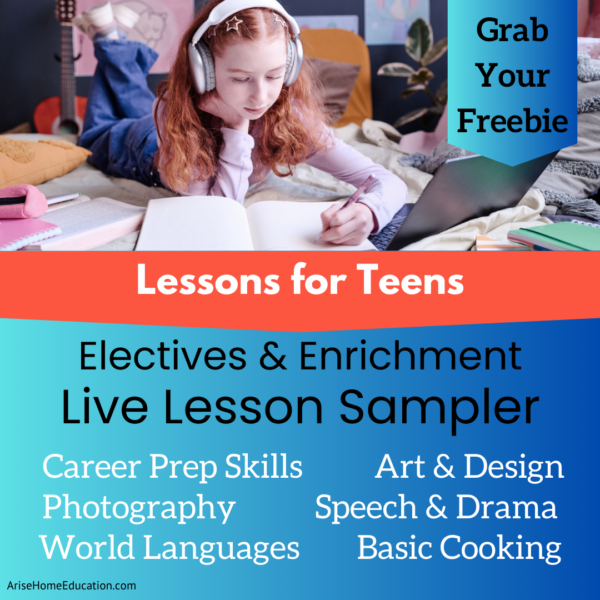
Are Arise Live Classes A Good Fit For Your Teen?
Grab a live lesson bundle and learn about the course, the tutor, and the weekly homework load.















5 thoughts on “Exploring Home Education Qualification Pathways for UK Teens”
Comments are closed.