
Learn Latin at Home
A Simple, Proven Approach for Home Educating Parents
Are you considering learning a new language, such as Latin, in your homeschool? Can you learn Latin at home? Is it really doable in a ‘normal’ homeschool routine? You’re probably asking these questions and more. Have you asked yourself any of these questions when it comes to considering Latin for foreign language study?
Where do I even start? Do I need to know Latin myself? Will my child cope? Isn’t Latin a dead language? How can I manage Latin classes in my homeschool?
The encouraging truth is that many families begin exactly where you are now. Many are unsure, busy, and often convinced Latin might be “too much.” And yet, over time, it becomes one of the most rewarding parts of their home education journey.
As shared in this podcast conversation and echoed in the Arise blog, “Learn Latin in Your Home Education,” Latin often starts as a tentative step… and turns into something families genuinely love.
Why Latin Feels Hard at First (and Why That’s a Good Thing)
Let’s be honest, classical Latin does require effort. Unlike some subjects, you can’t dip in once a week and expect it to stick. Latin is what educators call a mastery subject. Similar to maths, each lesson builds on the last, and nothing can be forgotten along the way.
That might sound intimidating, but it’s actually one of its greatest strengths. Because in learning Latin, your child is quietly developing:
- Attention to detail
- Memory and recall
- Logical thinking
- Discipline and consistency
In other words, Latin isn’t just another subject; it’s training the mind in a way that moves beyond foreign language learning, offering quiet support to all subjects.
Starting Latin at Home (Even If You’re Learning Too)
Did you hear it in the podcast? Hooray! You do not need to know Latin to begin. Many parents start by learning alongside their children. In fact, that shared experience of learning and a deeper understanding of Latin often becomes one of the most enjoyable parts of homeschooling.
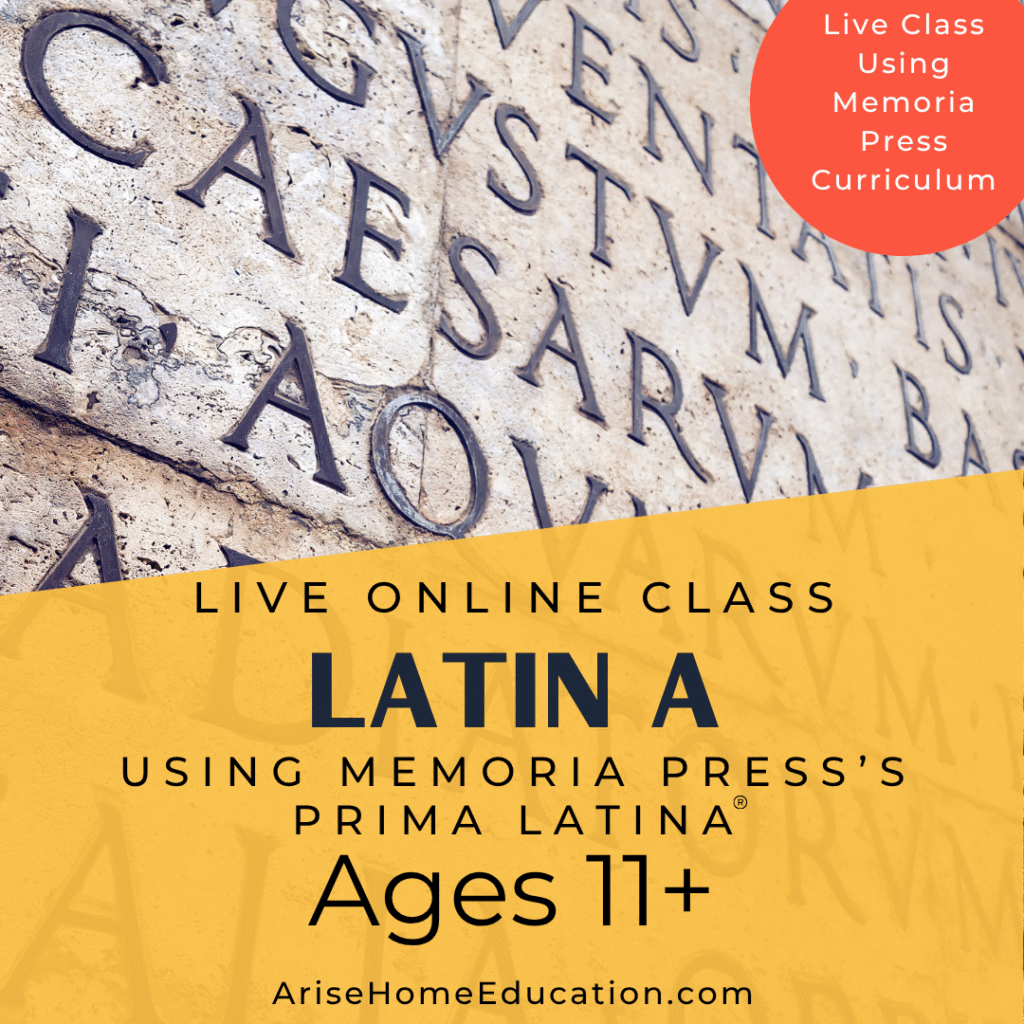
A gentle place to begin is with Latin A | Prima Latina. This course is designed to introduce Latin slowly and clearly, helping families build confidence from the very beginning. At this stage, children are simply:
- Learning the Latin alphabet and small amounts of vocabulary
- Becoming familiar with basic Latin grammar ideas
- Repeating and revisiting material regularly
It’s not about rushing ahead. It’s about laying foundations that will make everything else easier later in a high school-level Latin course, as well as other subjects like Roman history, science, and maths.
Progressing with Confidence (Not Pressure)
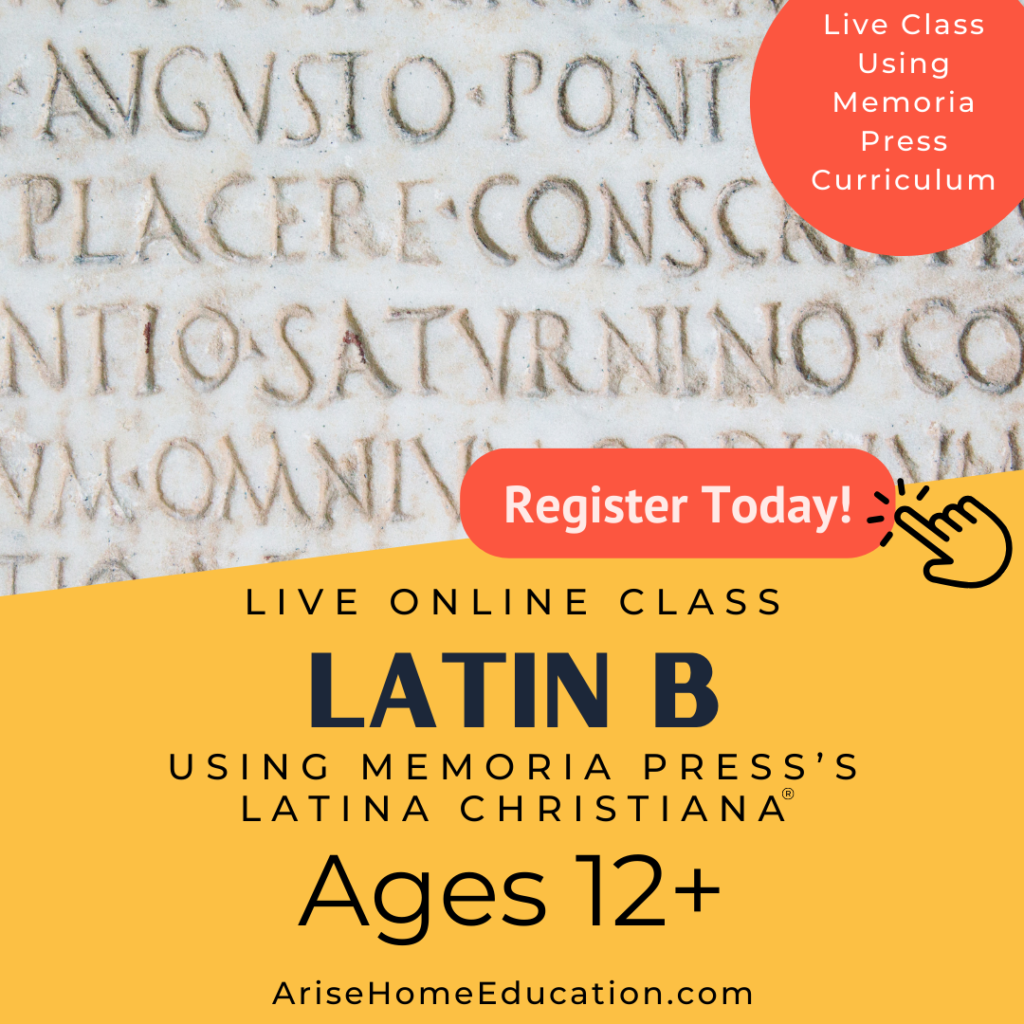
Once that foundation is in place from Latin A, the next step is Latin B | Latina Christiana. This is where things begin to deepen. But with a learning method that maintains a structured, manageable routine. Younger students start to:
- Recognise patterns in the Latin language, including word order
- Build sentences
- Understand how Latin words change through endings
What really matters here is not speed, but confidence. In live, online classes at Arise, students use the student workbook, helping them recognise vocabulary and patterns. This builds confidence, and they feel capable. That makes all the difference in the learning process and continued confidence during the secondary school years.
As discussed in the podcast, even older high school teens benefit from revisiting the basics first. It reduces overwhelm and helps them “hit the ground running” instead of struggling to catch up.
When Latin Really Starts to Click
For many families, the turning point comes with Latin 1 | First Form Latin. This is where Latin becomes more structured and rigorous, but also more rewarding. Programmes like First Form Latin are designed with a “grammar-first” approach, helping students systematically build understanding through repetition and practice.
At this stage, children begin to:
- Understand how sentences are constructed
- Work with verb tenses and noun groups
- Translate and analyse Latin texts more confidently
But here’s the key insight from the podcast:
This level only works well when the earlier foundations are secure.
Without that, Latin can feel overwhelming. With it, it becomes deeply satisfying. Using Latin literature, like Julius Caesar, to better understand Latin verbs and ancient Rome, helps older teens learn to enjoy classical literature and ancient texts. Online courses bring a sense of community learning that can extend and support home learning in a great way, allowing all ages to learn Latin together at their separate levels.
What Latin Looks Like in a Real Homeschool Day
One of the most practical takeaways from the conversation is this: The best way to learn Latin at home is to make it part of your daily rhythm. Not long, exhausting sessions, but short, consistent ones. Think of it like this:
- A few minutes revising vocabulary
- One or two workbook exercises
- Regular revisiting throughout the week
This steady approach is what leads to real progress. Depending on the age and level, Latin can be completed in 15 to 30 min a day at the lower levels, increasing as the high school levels become more rigorous. By then, the routine has been established, and Latin is easily part of everyday learning.
Trying to “batch” Latin into one day rarely works. But weaving it into your daily routine? That’s where you’ll see growth.
Live Latin Courses at Arise
-
Latin A using Prima Latina®
Price range: £198.00 through £203.50 -
Latin B | Latina Christiana®
£396.00 -

Latin 1 using Latin Form 1®
£413.50
The Unexpected Joy: Seeing Latin Everywhere
Something surprising happens when families stick with Latin. You’ll begin to notice it everywhere.
- In science terms.
- In maths vocabulary.
- In English grammar.
- In other languages.
Latin becomes “the old friend that appears across the curriculum.”
And this is where Latin moves from being just another subject to something that connects learning together.
You can learn Latin at home.
It’s easy to feel hesitant about starting Latin, especially if your days already feel full. But you don’t have to do everything perfectly. You just need to begin.
Start small. Stay consistent. Learn alongside your child if needed.
Over time, you’ll not only see progress, but you’ll also likely find that Latin becomes one of the most valuable (and surprisingly enjoyable) parts of your homeschool.
Latin Classes for 11-17
-
Latin A using Prima Latina®
Price range: £198.00 through £203.50 -
Latin B | Latina Christiana®
£396.00 -
Latin 1 using Latin Form 1®
£413.50
Are Arise Live Classes A Good Fit For Your Teen?
Grab a live lesson bundle and learn about the course, the tutor, and the weekly homework load.